



Solar-Powered Industrial Parks: Driving Hybrid Energy Manufacturing Growth in Africa
 africaprojectFebruary 2, 20263 Mins read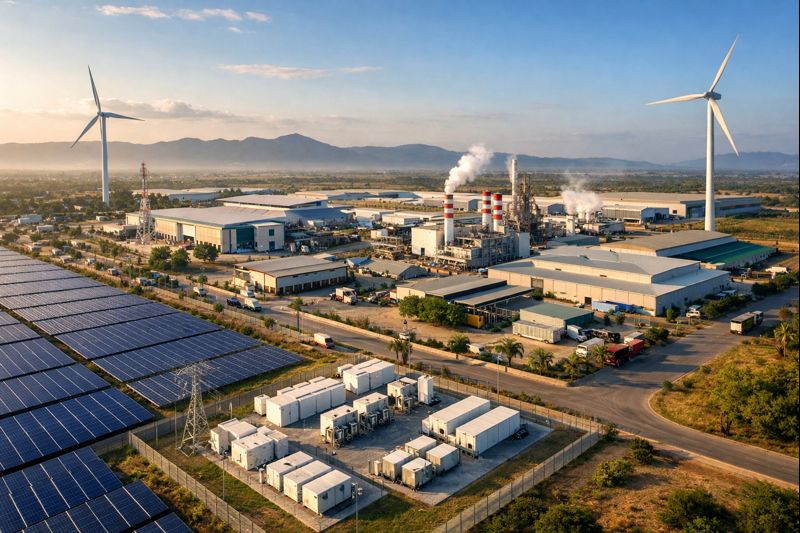
As Africa faces rising energy demand, climate pressures, and persistent industrialisation gaps, renewable energy is increasingly central to the continent’s development strategy. With abundant sunlight across most regions, solar power presents a reliable and scalable response to chronic electricity shortages. In recent years, governments and private investors have begun integrating solar energy systems into industrial parks, creating solar-powered hubs that support hybrid energy manufacturing and sustainable growth.
These industrial parks combine renewable sources with conventional power to stabilise production, lower operating costs, and improve competitiveness. Within the framework of the African Continental Free Trade Area (AfCFTA), solar-powered industrial parks are emerging as strategic platforms for regional manufacturing integration and long-term economic transformation.
Related Articles: AFRICA’S SOLAR SUPER-PROJECTS AND THE VISIONARIES POWERING A NEW ENERGY ERA
Energy Constraints and Industrialisation Challenges
Unreliable electricity supply remains one of the most significant barriers to industrial development across Africa. In countries such as Nigeria, Zambia, Malawi, and Sierra Leone, frequent power outages disrupt production cycles, damage equipment, and increase operating costs. As a result, many manufacturers rely heavily on diesel generators, which are costly and environmentally harmful.
These power constraints have discouraged investment and limited the expansion of manufacturing sectors. As African economies seek to diversify beyond raw material exports, stable and affordable energy has become a prerequisite for industrial competitiveness. Solar-powered industrial parks address this challenge by embedding energy generation directly within manufacturing zones.
The Rise of Solar-Powered Industrial Parks
Several African countries are already pioneering solar-integrated industrial zones. In Ethiopia, the Hawassa and Dire Dawa industrial parks incorporate solar installations and energy-efficiency measures to support textile and garment manufacturing. These initiatives reduce dependence on the national grid while lowering emissions.
Morocco has positioned itself as a continental leader through the Noor Solar Complex and renewable-powered industrial zones near Ouarzazate and Tangier. Manufacturing clusters in the automotive and aerospace sectors benefit from clean energy supplies, strengthening export competitiveness.
In Egypt, solar-powered zones linked to the Benban Solar Park supply energy to industrial estates in Upper Egypt, supporting cement, food processing, and construction-material production. South Africa’s Renewable Energy Independent Power Producer Procurement Programme has similarly enabled solar-linked industrial parks in the Northern and Eastern Cape provinces.
Kenya’s Naivasha Industrial Park demonstrates effective hybrid integration by combining geothermal and solar energy with grid supply. In West Africa, Ghana’s One District One Factory initiative and Nigeria’s Lekki Free Zone increasingly deploy solar rooftops and mini-grids to stabilise power supply.
Hybrid Energy Systems and Manufacturing Resilience
Solar-powered industrial parks typically operate through hybrid energy models that combine solar photovoltaic systems, grid electricity, battery storage, and backup generation. This diversified mix enhances reliability and operational resilience.
Battery storage allows factories to function during non-daylight hours, while smart energy management systems optimise consumption and reduce waste. In countries such as Tunisia and Namibia, digital monitoring platforms are increasingly used to regulate power flows and improve efficiency.
By reducing exposure to fuel price volatility and grid instability, hybrid systems provide manufacturers with predictable energy supply—an essential factor for export-oriented industries such as textiles, pharmaceuticals, electronics assembly, and food processing.
AfCFTA and Regional Manufacturing Integration
The AfCFTA aims to create a unified market of more than 1.3 billion people, promoting intra-African trade and integrated value chains. Solar-powered industrial parks support this objective by offering cost-efficient and environmentally compliant production bases.
Manufacturers in Rwanda, Kenya, and Senegal, for example, can source raw materials regionally, process them in renewable-powered zones, and export finished goods tariff-free across the continent. Lower energy costs enhance price competitiveness and market access.
Strategic trade corridors—including the Abidjan–Lagos Corridor, East Africa’s Northern Corridor, and Southern Africa’s North–South Corridor—are increasingly linked to green industrial hubs to facilitate cross-border trade.
Local Manufacturing, Skills, and Environmental Benefits
Solar-powered industrial parks also stimulate local manufacturing of renewable-energy components. Kenya, Rwanda, South Africa, and Egypt host assembly and production facilities for solar panels, inverters, mounting structures, and electrical components. These initiatives reduce import dependence and promote technology transfer.
The economic benefits extend beyond energy savings. Lower production costs attract foreign direct investment and support job creation across manufacturing, installation, maintenance, and energy services. Environmentally, renewable-powered parks reduce emissions and air pollution, strengthening access to green finance and sustainability-focused investors.
Challenges and the Way Forward
Despite their potential, solar-powered industrial parks face challenges, including high upfront capital costs, regulatory uncertainty, and technical capacity gaps. Many projects rely on concessional finance and development finance institutions, while inconsistent power-purchase agreements and tariff frameworks undermine investment confidence.
To accelerate progress, governments must align energy, industrial, and trade policies within AfCFTA frameworks. Streamlined regulations, standardised licensing, and public–private partnerships will be essential. Advances in battery technology, smart grids, and green hydrogen further strengthen the future of hybrid energy manufacturing in Africa.
Solar-powered industrial parks represent a transformative model for Africa’s industrialisation and energy transition. By embedding renewable energy into manufacturing ecosystems, these hubs improve productivity, resilience, and sustainability. Within the AfCFTA framework, they serve as engines of regional integration, positioning Africa for competitive, low-carbon industrial growth.



Related Articles

Digital Government: E-Governance Infrastructure Modernizing Public Services
Digital government has become a cornerstone of public sector reform as states...
Science & Technology Parks Fueling Continental Innovation
Science and technology parks have become vital engines of innovation, industrial transformation,...
Mining Logistics Infrastructure: Expanding Railways, Ports, and Processing
Mining remains one of Africa’s most critical economic sectors, supplying the world...


Transforming Justice Delivery: New Court and Administrative Complexes
Across Africa, the modernization of justice infrastructure is emerging as a central...
