




Mining Logistics Infrastructure: Expanding Railways, Ports, and Processing
 africaprojectJanuary 21, 20263 Mins read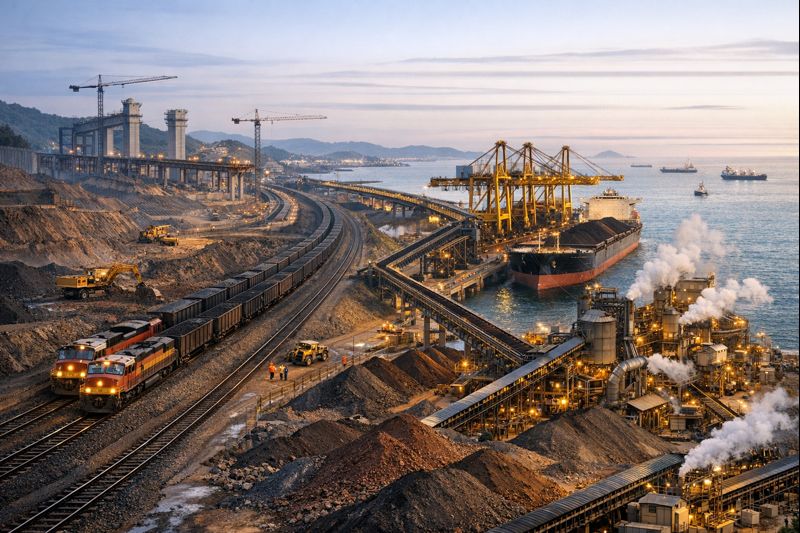
Mining remains one of Africa’s most critical economic sectors, supplying the world with essential minerals, precious metals, and industrial raw materials. Today, the competitiveness of African mining is increasingly shaped not only by resource endowment but by the quality of logistics infrastructure linking mines to processing plants and export terminals. Governments and private investors across the continent are expanding railways, modernizing ports, and developing mineral processing capacity to reduce transport costs, improve reliability, and retain more value locally. These investments are reshaping mining value chains and strengthening Africa’s place in global supply networks.
In Southern Africa, South Africa continues to anchor the region’s mining logistics ecosystem. Its heavy-haul rail corridors remain vital for coal and iron ore exports, with the Sishen–Saldanha line serving as a lifeline between Northern Cape mines and the Port of Saldanha. Upgrades to rail capacity, signaling systems, and port handling equipment aim to remove bottlenecks and boost throughput. Simultaneously, investments in mineral processing and beneficiation reflect a broader push to shift from raw mineral exports to higher-value products.
Related Articles: Africa’s Most Ambitious Tourism Infrastructure Developments
Namibia has become an important logistics gateway for landlocked mining economies. The Port of Walvis Bay—modernized and expanded in recent years—handles bulk minerals from Namibia and neighboring countries such as Botswana, Zambia, and the Democratic Republic of Congo. Namibia’s own uranium and base-metal sectors benefit from efficient export corridors, while new processing facilities reinforce its strategy of using logistics strength to promote value addition. This approach demonstrates how ports can serve as regional rather than purely national assets.
In West Africa, mining logistics investment is accelerating as countries develop large iron ore, bauxite, and gold resources. Guinea’s bauxite industry is a key example of how integrated rail and port development can transform a sector. New railways linking inland deposits to coastal terminals have attracted leading global mining firms, while port expansions along Guinea’s coast have increased export volumes and reduced turnaround times. Alumina refining projects under development signal growing momentum toward domestic processing supported by dedicated logistics corridors.
Ghana’s gold industry relies on robust road, port, and processing infrastructure centered around Takoradi and Tema. Improvements in port capacity and inland transport have enhanced export efficiency, while domestic refineries are strengthening the country’s ability to process gold locally. These developments reinforce Ghana’s position as a regional mining services hub and reduce reliance on overseas refining.
In East Africa, enhanced logistics capacity is enabling new mining frontiers. Tanzania is upgrading ports in Dar es Salaam and Tanga and rehabilitating key rail lines, supporting the export of gold, tanzanite, and industrial minerals while facilitating the import of mining machinery. The establishment of domestic mineral processing plants demonstrates Tanzania’s commitment to retaining more value within national borders.
Kenya’s smaller mining sector is benefiting from broader national infrastructure investments, such as the Standard Gauge Railway and expanded capacity at the Port of Mombasa. These improvements are strengthening export routes for soda ash, cement inputs, and emerging mineral projects. By integrating mining logistics into national transport planning, Kenya is laying the foundation for growth as new mineral discoveries emerge.
In Central Africa, the Democratic Republic of Congo sits at the heart of global copper and cobalt supply chains. Efficient logistics are essential to transporting these minerals from inland mines to international markets. Rail links to southern Africa, road corridors to ports in Angola and Tanzania, and new processing facilities are gradually improving capacity. Expanded smelters and refineries now support partial in-country processing of copper and cobalt, though infrastructure and governance challenges remain significant.
Zambia’s Copperbelt similarly demonstrates the importance of integrated logistics. Rehabilitation of rail links to ports in Tanzania and South Africa is improving export reliability, while investments in smelting and refining capacity enhance local value addition. Zambia’s experience underscores how regional cooperation and cross-border transport corridors are indispensable for landlocked mining economies.
In North Africa, Morocco’s phosphate sector offers a strong model of vertically integrated mining logistics. Rail networks connect inland phosphate deposits to processing plants and export terminals along the Atlantic coast. Investments in slurry pipelines, port facilities, and chemical processing plants have enabled Morocco to become a global leader in phosphate-based fertilizers, reducing logistics costs and supporting a diversified export portfolio.
Across the continent, the expansion of mining logistics infrastructure reflects a strategic shift toward integrated value chains. Modern railways reduce reliance on road transport, cutting costs and environmental impacts. Upgraded ports improve export efficiency and attract long-term investment. Processing plants enable countries to capture more value domestically, create skilled jobs, and stabilize revenues. These developments align with regional integration frameworks that promote shared infrastructure across borders.
Mining logistics is no longer a supporting function—it is a core determinant of mining competitiveness. As railways, ports, and processing facilities continue to expand and modernize, African countries are better positioned to convert mineral wealth into sustainable development. Success will depend on continued investment, sound governance, and regional cooperation to ensure Africa’s resources are transported efficiently, processed locally, and integrated into global supply chains on more favorable terms.





Related Articles
Solar-Powered Industrial Parks: Driving Hybrid Energy Manufacturing Growth in Africa
As Africa faces rising energy demand, climate pressures, and persistent industrialisation gaps,...

Digital Government: E-Governance Infrastructure Modernizing Public Services
Digital government has become a cornerstone of public sector reform as states...
Science & Technology Parks Fueling Continental Innovation
Science and technology parks have become vital engines of innovation, industrial transformation,...



Transforming Justice Delivery: New Court and Administrative Complexes
Across Africa, the modernization of justice infrastructure is emerging as a central...
