


FORGING AHEAD: INSIDE AFRICA’S BEHEMOTH INDUSTRIAL PLANTS
 africaprojectDecember 23, 20253 Mins read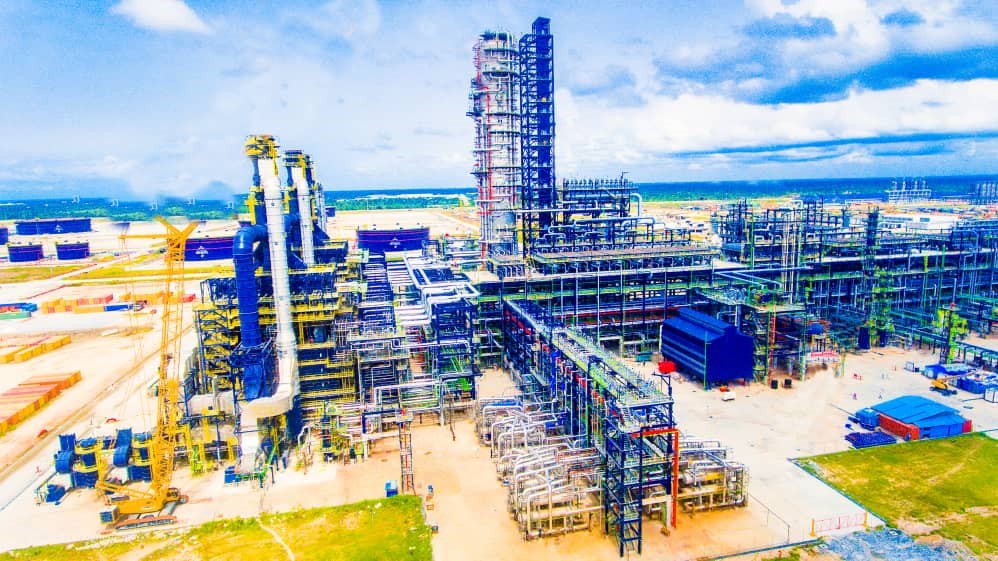
Africa’s manufacturing sector is accelerating toward a projected $285 billion output in 2025, signaling a shift from raw-material exporter to value-adding force. From Nigeria’s massive Dangote Refinery to Morocco’s expanding automotive hubs, these industrial giants are reshaping economies and creating new opportunities for a youthful population that needs millions of jobs each year. Inside these facilities where machinery hums and sparks fly Africa’s industrial transformation is taking shape, even amid energy strains and global competition.
Towering over the Lekki Free Trade Zone in Lagos, the Dangote Refinery stands as the continent’s most ambitious industrial project. As the world’s largest single-train refinery, it can process 650,000 barrels of crude per day into fuels, petrochemicals, and polypropylene. Conceived by industrialist Aliko Dangote, the $20 billion complex spans more than 2,600 hectares and includes its own port and power plant. After reaching full operations in early 2025, it cut Nigeria’s fuel import bill nearly in half during its first year. By November 2025, output was climbing toward 700,000 barrels per day, supported by a new automation partnership with Honeywell that could help double capacity by 2028. For Dangote, the refinery represents “economic independence,” powered by a workforce of 10,000 and advanced systems rivaling global competitors.
Related Articles: Africa’s Green Industrial Revolution: Leading Low-Carbon Manufacturing Projects
Inside the refinery, crude travels through dedicated pipelines, then into large furnaces and cracker units that produce fuels cleaner than many European standards. Petrochemical lines manufacture plastics used across industries, from electronics to agriculture. A 435-megawatt gas plant keeps the refinery operating continuously. About 70% of employees are locally trained, blending international expertise with Nigerian talent. By late 2025, exports across West Africa had risen 40%, positioning Lagos as a rising refining and petrochemical hub.
Further inland lies another major Dangote project: the Obajana Cement Plant in Kogi State, the largest in Africa with a capacity of 16.25 million tonnes a year across five production lines. Positioned near vast limestone reserves, the 45-square-kilometer complex employs about 5,000 people and produces clinker used in construction across the continent. In 2025, Obajana reached record utilization levels of over 90%, reinforcing Dangote Cement’s dominance across 10 countries. Recent upgrades including solar installations and waste-heat recovery reduced emissions by roughly 20%, setting a greener example in a carbon-intensive industry.
In South Africa’s Vaal Triangle, ArcelorMittal’s Vanderbijlpark Works remains central to the region’s steel production. Established in the 1920s and now spanning 1,000 hectares, it produces close to 2.8 million tonnes of steel yearly for industries ranging from automotive manufacturing to energy. About 7,000 workers operate advanced electric arcs, rolling mills, and automated quality-control systems. But 2025 was turbulent: frequent energy shortages, rising imports, and financial strain led to thousands of job cuts and a planned closure of some long-steel operations. A proposed $460 million support package from the Industrial Development Corporation helped stabilize the situation, with leadership expressing determination to keep South Africa’s steel sector competitive
Across the continent, Morocco has become Africa’s automotive powerhouse. In Kenitra Automotive City, Stellantis recently expanded its plant to produce up to 535,000 vehicles annually, including popular Peugeot and Citroën models destined for European markets. The 300-hectare industrial zone hosts dozens of suppliers, lifting local content to around 80%. Combined with Renault’s Tangier plant capable of assembling about 400,000 vehicles per year Morocco surpassed South Africa as the continent’s largest auto producer in 2025. Factories employ tens of thousands of young Moroccans trained in new automotive and electric-vehicle technologies, with the country preparing to add battery-production lines by 2030.
Farther south, in KwaZulu-Natal, the Hillside Aluminium Smelter stands as the largest in the southern hemisphere, producing roughly 720,000 tonnes of aluminum each year. Operated by South32, the smelter supports industries from renewable energy to transport. Its counterpart in Mozambique, Mozal, produces about 560,000 tonnes annually but faced uncertainty heading into 2026 due to power-supply challenges. Meanwhile, new investment signals growth elsewhere: Russian company Rusal began developing a $1 billion aluminum smelter in Ethiopia that will draw on hydropower for low-carbon production by 2028.
As 2025 draws to a close, Africa’s industrial giants stand as proof of a rapidly evolving manufacturing landscape. From Obajana’s towering kilns to Kenitra’s robotic assembly lines, these massive facilities reflect a continent determined to shape its economic future. Rather than remaining on the margins of global industry, Africa is forging its place at the center of the manufacturing world one plant, one product, and one breakthrough at a time.



Related Articles

Cutting-Edge Environmental Conservation Projects and Their Champions
Environmental conservation has entered a decisive era. As climate change accelerates, biodiversity...
Clean Water Access Projects Improving Lives in Underserved Regions
Access to clean and reliable water remains one of Africa’s most pressing...
Industrial Corridors Attracting Global Investors
Across Africa, industrial corridors are emerging as strategic economic arteries driving industrialization,...


The Engineers Behind Africa’s Tallest and Most Iconic Towers
Across Africa, the rise of tall and iconic towers is reshaping skylines...
