Bold Urban Transport Projects: Expanding BRT, Metro, and Light Rail in African Cities
 africaprojectJanuary 7, 20263 Mins read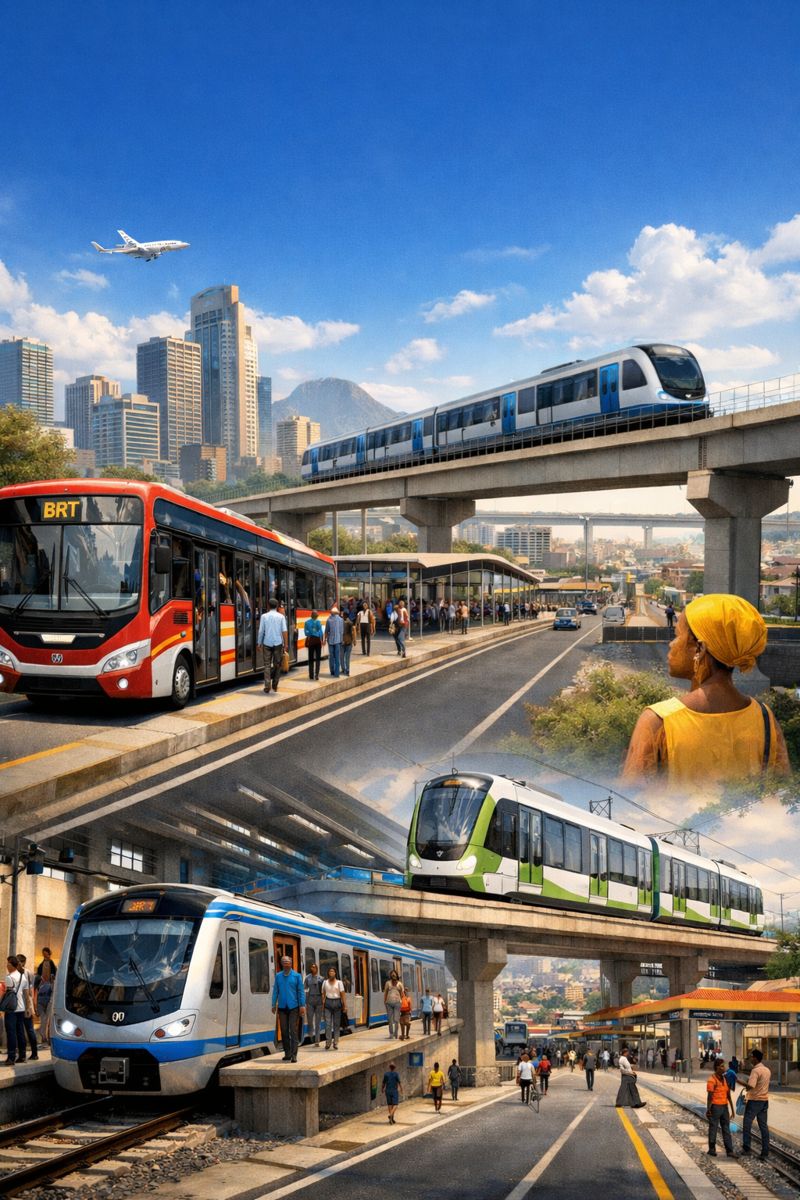
Across Africa, rapid urbanization is reshaping cities at an unprecedented pace. As urban populations grow faster than traditional infrastructure can accommodate, congestion, long commute times, and rising pollution have become daily realities. In response, governments across the continent are investing in bold urban transport projects—particularly Bus Rapid Transit (BRT), metro rail, and light rail systems—to modernize mobility, support economic growth, and improve overall quality of life.
These initiatives are increasingly central to how African cities plan for a more sustainable, inclusive, and competitive future.
Related Articles: THE PROJECT DIRECTORS EXPANDING AFRICA’S RAPIDLY GROWING RAIL NETWORKS
Bus Rapid Transit has emerged as the most widely adopted mass transit solution across Africa, largely due to its relatively lower cost, flexibility, and scalability. South Africa has been a continental leader in BRT development. Johannesburg’s Rea Vaya BRT was designed to link townships such as Soweto with major economic centers, helping to address spatial inequalities rooted in apartheid-era planning. Similarly, Cape Town’s MyCiTi BRT connects outlying residential areas to the city center and airport, significantly reducing travel times for commuters. In East Africa, Dar es Salaam’s BRT stands out as one of the most successful systems on the continent, transporting over 200,000 passengers daily and serving as a model for cities seeking rapid and affordable mobility solutions.
Metro rail systems, while more capital-intensive, are gaining momentum in Africa’s largest and most densely populated urban centers. Egypt remains a pioneer in this space. The Cairo Metro—the first of its kind in Africa—continues to expand, with new lines linking satellite cities and easing pressure on overcrowded roads. The system plays a vital role in moving millions of people daily, particularly low- and middle-income residents who depend on affordable public transport. In North Africa, the Algiers Metro has also expanded steadily, improving urban connectivity and complementing the city’s growing tramway network.
These metro investments reflect a long-term commitment to high-capacity rail systems capable of supporting megacity growth.
Light rail systems are increasingly attractive to cities seeking a balance between capacity, cost efficiency, and urban integration. Morocco has emerged as a continental leader in modern tram and light rail development. Casablanca’s tramway network is among the largest in Africa, spanning multiple lines that serve residential, commercial, and industrial zones. The shared tramway system in Rabat and Salé has significantly improved cross-city mobility while enhancing urban aesthetics and pedestrian-friendly spaces. In East Africa, the Addis Ababa Light Rail marked a milestone as the first of its kind in sub-Saharan Africa, providing affordable electric rail transport and easing congestion along major urban corridors.
West African cities are also exploring rail-based solutions alongside BRT investments. In Senegal, the Dakar Regional Express Train (TER) represents a major leap forward in suburban rail transport. By linking Dakar’s city center with surrounding suburbs and the new international airport, the TER is reshaping commuting patterns and supporting planned urban expansion. In Ghana, although Accra remains heavily reliant on road-based transport, government-backed urban rail revival plans and proposed BRT corridors signal a gradual shift toward more structured mass transit systems to address chronic congestion.
Beyond mobility, these transport projects generate wide-ranging economic and social benefits. Improved urban transport enhances productivity by reducing time lost in traffic and expanding access to jobs, education, and healthcare. Industrial zones and commercial districts become more attractive when reliably connected to labour markets. In cities such as Nairobi, ongoing BRT corridor development is expected to support transit-oriented development, encouraging higher-density housing and commercial activity around transport hubs.
Environmental sustainability is another critical driver of these investments. Urban transport is a growing source of carbon emissions across African cities. Electrified light rail and metro systems in countries such as Ethiopia and Morocco reduce dependence on fossil fuels, while modern BRT fleets increasingly adopt cleaner fuels and electric buses. These shifts contribute to improved air quality, reduced noise pollution, and healthier urban environments.
Despite their promise, urban transport projects in Africa face challenges, including funding constraints, land acquisition complexities, and institutional capacity gaps. However, partnerships with development banks, private investors, and international climate finance institutions are helping to bridge these gaps. When supported by strong governance frameworks and inclusive planning, such projects can deliver transformative and lasting results.
As African cities continue to expand, BRT, metro, and light rail systems are no longer optional luxuries—they are essential infrastructure. By investing boldly in modern urban transport, African countries are laying the foundation for cities that are more connected, competitive, and resilient in the decades ahead.




Related Articles

Cutting-Edge Environmental Conservation Projects and Their Champions
Environmental conservation has entered a decisive era. As climate change accelerates, biodiversity...
Clean Water Access Projects Improving Lives in Underserved Regions
Access to clean and reliable water remains one of Africa’s most pressing...

Industrial Corridors Attracting Global Investors
Across Africa, industrial corridors are emerging as strategic economic arteries driving industrialization,...


The Engineers Behind Africa’s Tallest and Most Iconic Towers
Across Africa, the rise of tall and iconic towers is reshaping skylines...
