




AFRICA’S DIGITAL LEAP: HIGH-SPEED TELECOM PROJECTS BRIDGE THE CONTINENT
 africaprojectDecember 19, 20253 Mins read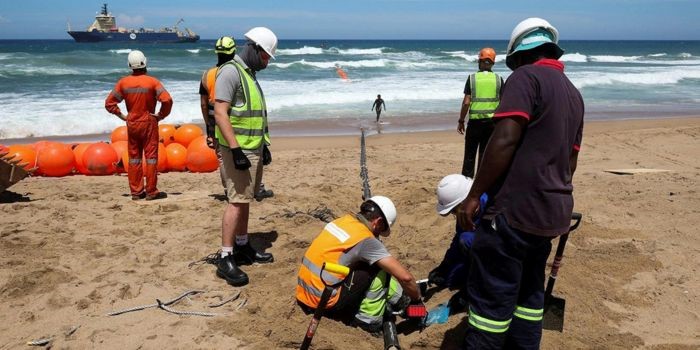
Africa is entering a transformative era of connectivity as high-speed telecommunications projects rapidly expand broadband access across the continent. From massive submarine cables hugging Africa’s coastlines to ambitious fiber backbones cutting through its interior, these efforts are narrowing the digital divide, boosting data capacity, and enabling advances in AI, cloud computing, and digital services. As of 2025, internet penetration in Sub-Saharan Africa remains around 38%, but investments from global tech companies, African telecom operators, and development banks are accelerating progress potentially adding billions of dollars to regional GDP. Experts note that these projects strengthen both global links and intra-African digital integration, addressing persistent gaps in rural access and affordability.
A centerpiece of this connectivity revolution is the 2Africa subsea cable system, completed in November 2025. At 45,000 kilometers, it is the world’s longest open-access submarine cable, developed by a consortium including Meta, Bayobab (MTN), Vodafone, Orange, and several international partners. The cable loops around the entire continent, connecting Africa’s east and west coasts to Europe, the Middle East, and South Asia across 33 countries. With an extraordinary capacity of up to 180 terabits per second, 2Africa will support high-bandwidth services, from AI-driven applications to cloud computing, while helping reduce bandwidth costs for internet providers. Analysts estimate it could add up to $36.9 billion to African GDP within its first few years by supporting job creation, digital startups, and innovation hubs.
Related Articles: How Digital Transformation Is Reshaping Africa’s Supply Chains
On land, Africa is experiencing an equally ambitious expansion of terrestrial fiber networks. In late 2025, Niger completed a major section of the Trans-Saharan Optical Fibre Backbone, delivering more than 1,000 kilometers of new infrastructure. Funded with €43 million from the African Development Bank, the 1,031-km network links Niger with Algeria, Chad, Nigeria, Benin, and Burkina Faso through five cross-border routes. It also includes an urban loop for government sites and a national data center. The project aims to strengthen regional integration, modernize public services, and lower internet costs, opening new opportunities for young people through e-commerce, mobile finance, and tech-enabled enterprises. Similar expansions are underway across the continent—such as Nigeria’s Project Bridge, which targets 90,000 km of fiber to reach over 70% national internet penetration and reduce access costs by 60%.
Google’s Umoja fiber optic cable marks another major milestone. Announced in 2024 and slated to go live in 2027, it will create the first direct route from Africa to Australia. Starting in Kenya, Umoja travels through Uganda, Rwanda, the Democratic Republic of Congo, Zambia, Zimbabwe, and South Africa before crossing the Indian Ocean. The system improves global redundancy and supports Africa’s growing data demands. Umoja links to Google’s broader $1 billion African infrastructure strategy—which includes cloud regions, digital-skills initiatives, and AI training programs—and is projected to generate $17 billion in GDP gains.
Satellite connectivity is also expanding rapidly. Starlink, SpaceX’s low-Earth orbit satellite service, reached 25 African countries by October 2025, with recent launches in Chad and the Democratic Republic of Congo. Partnerships with operators like Airtel Africa and Vodacom are helping integrate satellite coverage into national networks, accelerating 4G and 5G rollouts in underserved rural areas of Mozambique, Tanzania, and other regions. While satellite technology provides high-speed access without extensive physical infrastructure, affordability remains a challenge, with user kits costing $200–$400, alongside concerns over data sovereignty and regulatory oversight.
Chinese-backed investments continue to play a significant role as well. Projects such as the PEACE cable and extensive Belt and Road–funded fiber networks support over half of Africa’s wireless sites, offering high-speed broadband to hundreds of millions. Infrastructure upgrades including ports, airports, and energy facilities further support telecom growth, as seen through improvements to Cameroon’s Kribi Deep Seaport and Ethiopia’s Bole International Airport.
Looking ahead, Africa’s telecom surge is set to reshape the continent’s digital landscape. By 2030, 5G penetration could reach 17%, and the mobile ecosystem is projected to contribute 7.3% of Africa’s GDP. As major projects like 2Africa and Umoja become fully operational and as satellite technologies scale further the continent is poised to leapfrog traditional barriers. With a growing, tech-driven youth population, Africa is on track to become a major player in the global digital economy, turning increased connectivity into innovation, opportunity, and inclusive growth.



Related Articles
Solar-Powered Industrial Parks: Driving Hybrid Energy Manufacturing Growth in Africa
As Africa faces rising energy demand, climate pressures, and persistent industrialisation gaps,...

Digital Government: E-Governance Infrastructure Modernizing Public Services
Digital government has become a cornerstone of public sector reform as states...
Science & Technology Parks Fueling Continental Innovation
Science and technology parks have become vital engines of innovation, industrial transformation,...



Mining Logistics Infrastructure: Expanding Railways, Ports, and Processing
Mining remains one of Africa’s most critical economic sectors, supplying the world...
